A B2C→B2B2C pivot for a neurorehab platform, from strategy to shipped product
Neurofenix · Product Manager · 2021–2025
What I owned: end-to-end product across three surfaces
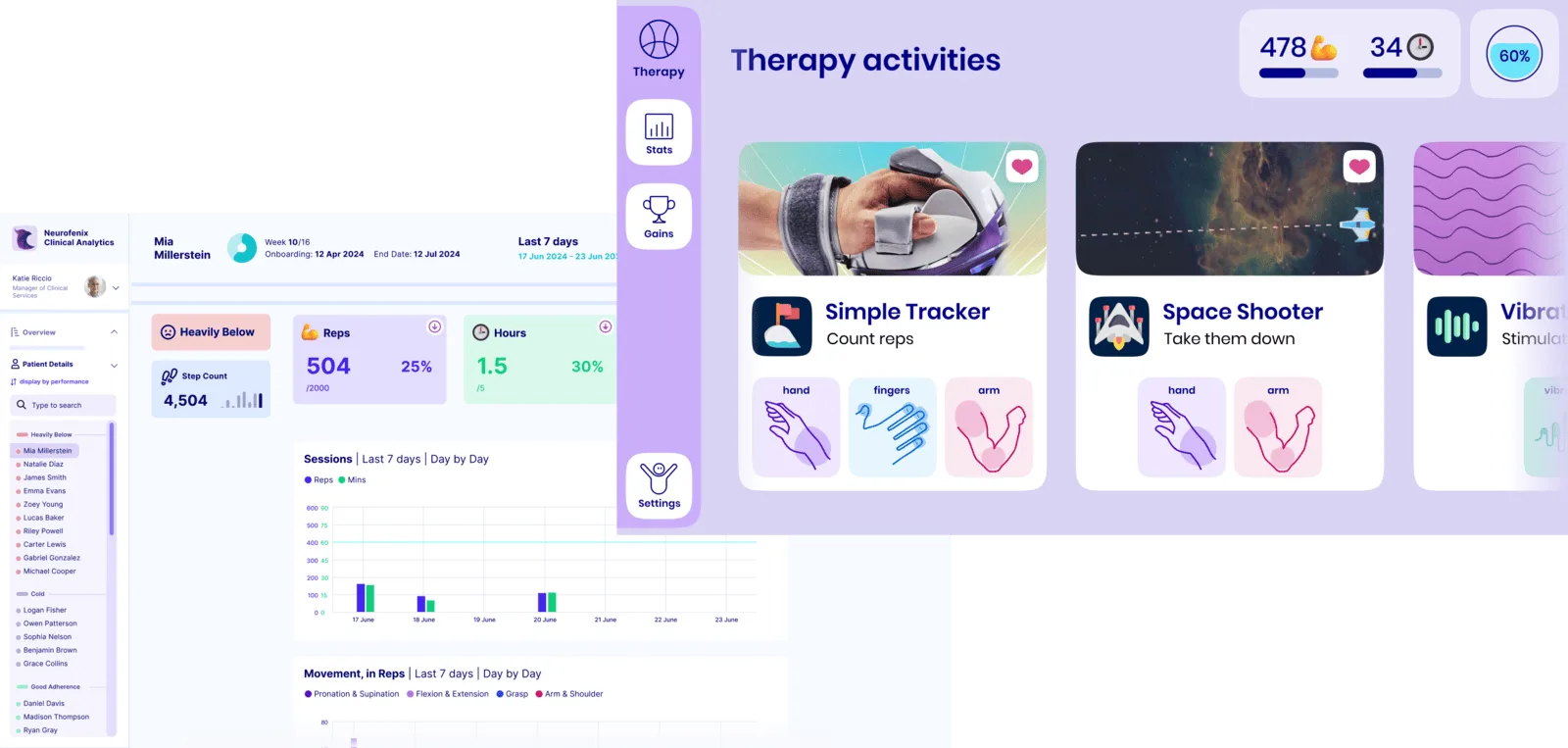
I owned product across the Patient app (full rebuild) and the Clinician and Partner Dashboards (both net new). I came in as a designer and quickly moved to co-owning the product, then owning it: strategy, discovery, the roadmap, and the day-to-day with engineering and the clinical team.
Stakeholder mapping, user research with patients and clinicians, metrics framework definition, enterprise requirements translation, pilot enablement.
Roadmap ownership, activation experiments, cross-functional alignment, HIPAA compliance decisions, engineering handoff, launch sequencing.
Context: what I walked into
Neurofenix builds connected neurorehabilitation technology for stroke and brain injury survivors recovering at home. Two product families, four surfaces, three of which I owned.
Patient App
on a tablet
gamified home therapy
I owned thisNeuroBall
upper limb device
patented, 4 clinical trials
not my remitClinician Dashboard
care delivery teams
caseload triage · RTM
I owned thisPartner Dashboard
coordination & operations
screening · outcomes
I owned thisThe NeuroBall was the strong part. Patented, validated across four clinical trials including one at Johns Hopkins, and working for roughly 90% of patients. Some did struggle with it, but hardware changes are expensive and the device wasn't where we were losing most people. The software was. The Patient App was geeky and not user friendly. It had never had a proper redesign, it just kept gaining features. The B2B channel existed more on paper than in practice, and patients were disengaging at home because the app couldn't support independent use and there was no clinical support between sessions.

There was already a strict engineering process. The NeuroBall is a medical device, so its software sat under IEC 62304 and ISO 14971: safety analysis, traceability from requirement to test, a documentation file for every release. The process governed how software got built safely. It said nothing about what should be built. Requirements arrived already decided, and engineering delivered them properly. The missing step came earlier: deciding what was worth building at all.
The pivot was two changes at once: B2C to B2B2C, and UK to US. In the UK we sold to the person using it. In the US the buyer is a health system, a rehab facility or an ACO, and they buy on reimbursement and risk. This is why adherence data became billing evidence, and the monitoring log had to be auditable, not merely useful.
HIPAA changed how the product had to be built. Only authorised people can open a patient's record, and every time someone does, it has to be logged.
Patient consent forms were a separate problem. Handling them means running certified infrastructure, so we used an external HIPAA-compliant provider and connected it to our systems rather than building and certifying our own.
The sales cycle ran 12 to 24 months, so we had to anticipate objections in the product rather than react to them.

Discovery: three stakeholders, one platform
Three audiences with distinct success metrics, all dependent on a single platform
Patients, stroke and brain injury survivors, many elderly, needed radical simplicity. Every friction point was a dropout risk.
Clinicians managing 20–40+ patients remotely needed prioritised signal: which patients are falling behind, and who needs an intervention today. Onboarding friction fed straight into that. A patient who could not get set up at home showed up as silence in the data, and most of ours were elderly stroke survivors, for whom a tablet, a wifi setup and pairing a device were not trivial.
Health system administrators drove the enterprise sales cycle. They needed population-level outcomes, Medicare billing compliance, and ROI evidence to justify procurement.
Clinician dashboard: monitoring, ordered by who needs attention
A net-new product. Clinicians don't have the hours to look at every patient equally, and the people running the service don't want them to, because staff time is what limits how many patients a clinic can take on. So the dashboard had to do the ranking itself and flag the patients who were slipping before anyone thought to check on them.
The primary view is a caseload sorted into adherence tiers, with one-click drill-down into session data. HIPAA constraints (role-based access, audit logging, monitoring log) were in the spec from day one rather than retrofitted later. The monitoring log does double duty: it powers the North Star Metric (48h intervention rate on at-risk patients) and generates Medicare RTM billing evidence from the same data pipeline.
The prototype below is live. It runs on the same tokenised design system that shipped to pilot.
LIVE PROTOTYPECaseload overview: four adherence tiers (Exceeded, Good, Slightly Below, Low), sparklines, patient columns with alert badges, and a 16-week stacked trend.
LIVE PROTOTYPEPatient detail: alert banner, monitoring log, KPI cards, active ADL tasks, week-by-week adherence, and a sessions chart with a Reps / By Body Part toggle.
Partner Dashboard: deciding who belongs on the programme
The second dashboard is for the care coordination and operations teams inside a clinic rather than for clinicians. Its main job is screening: working out quickly which discharged patients are suitable for virtual rehab, and then tracking whether the programme they were put on is working.
LIVE PROTOTYPEThe patient list, with everyone's stage in the pathway and who is carrying them.
Enabling the business: enterprise needs into roadmap decisions
Health system buyers already ran their own systems, so the question was never what to add, it was how we fitted alongside what they already had. Overlap with the tools they had created friction, the same problem I had hit at Opensignal. Working with the commercial team, I turned that into product priorities: HIPAA-compliant remote monitoring, EHR integration points, and measurement across all three stakeholder groups, so the commercial team had evidence of clinical ROI to put in front of procurement rather than usage stats.
The first enterprise pilot: we secured the company's first health system pilot. I co-built the live demo, co-ran the stakeholder sessions with clinicians, and reprioritised the near-term roadmap around the objections we were hearing in sales cycles.
Patient app: phased rebuild, prioritised for activation
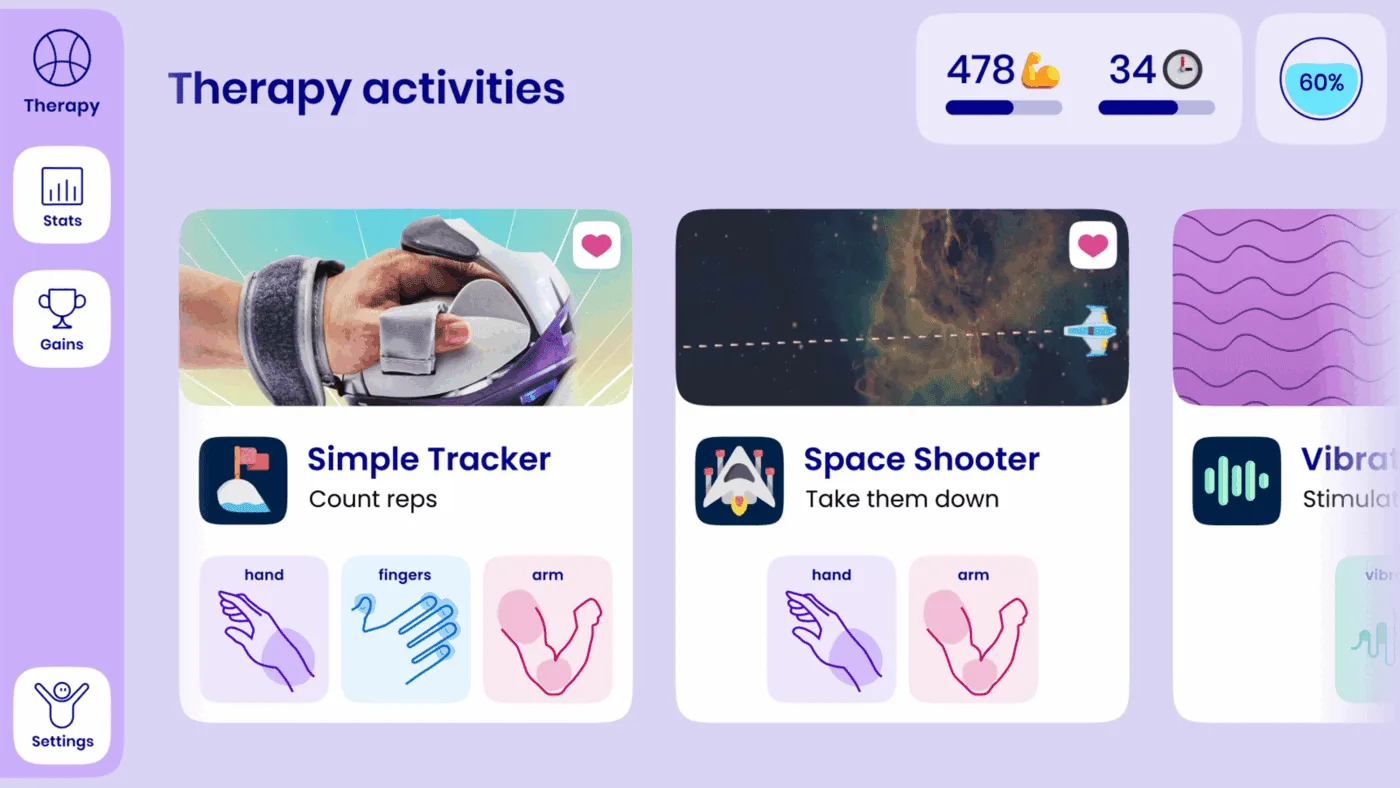
We redesigned the app to be genuinely useful and understandable, and shipped it as a new system rather than a patch. Activation was part of that: onboarding, problem solving, and getting a patient set up at home on their own. If they could not, their first clinical session turned into a troubleshooting call: wifi, pairing the device, tablet settings. That is not therapeutic session time, so it can't be claimed from Medicare.
Accessible from the first release: we agreed one principle up front, that every product decision had to work for the most impaired user first. Oversized touch targets, simplified navigation, no time-sensitive interactions, and fewer elements on any given screen. Warm rather than clinical.
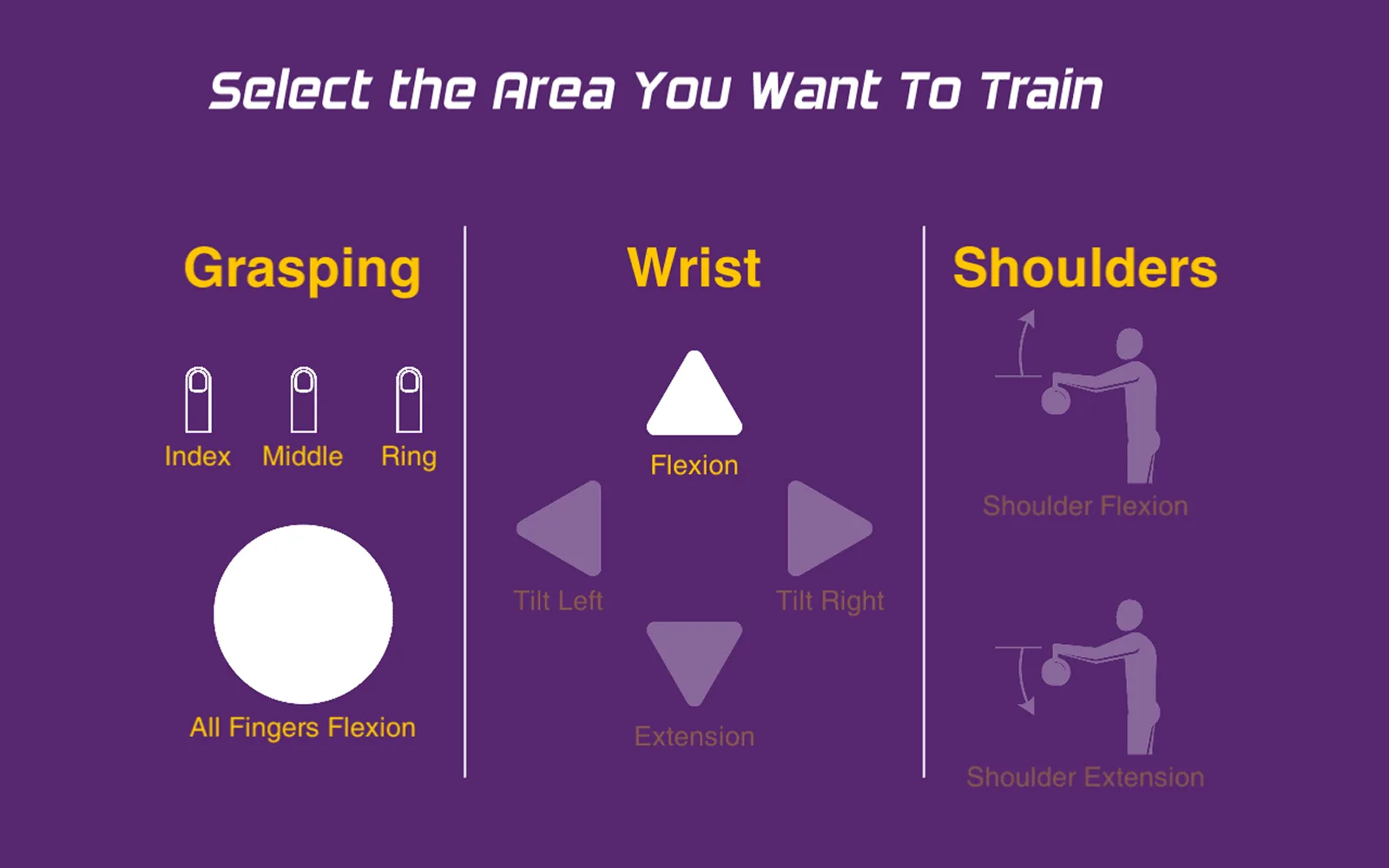
Onboarding as product strategy: Before the rebuild, there was no structured first-run experience. I defined a step-by-step flow, one action per screen, video walkthroughs for each app section, and visual confirmation at every stage.
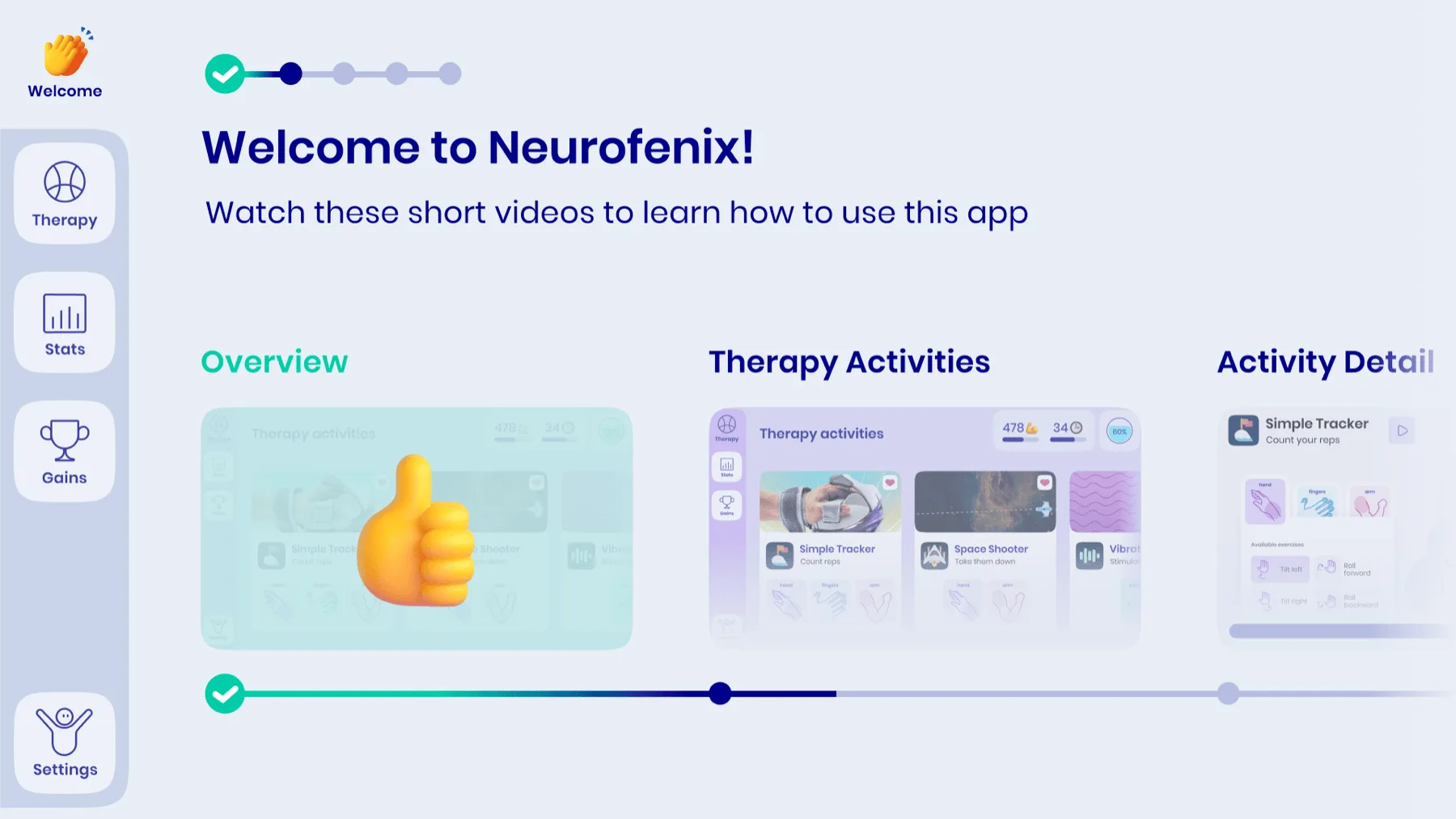
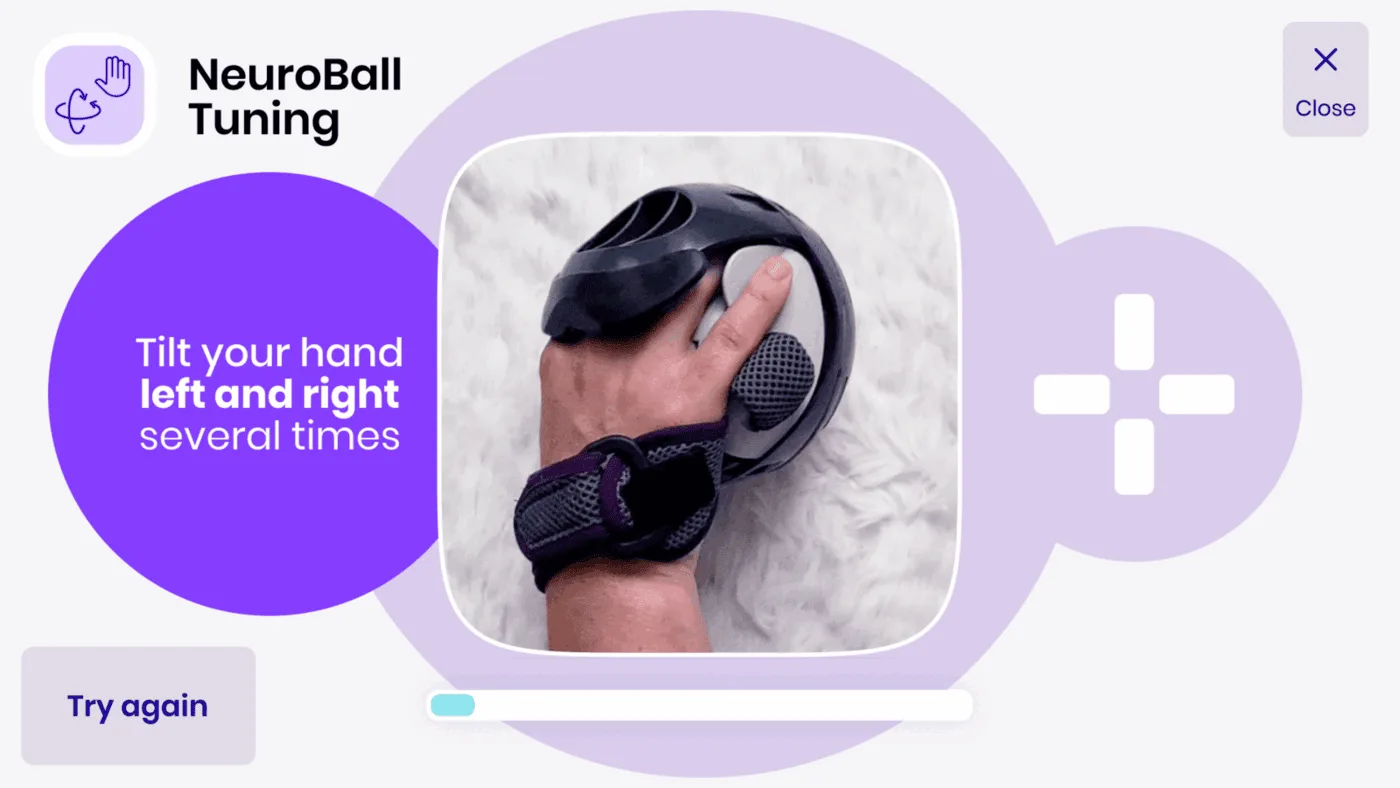
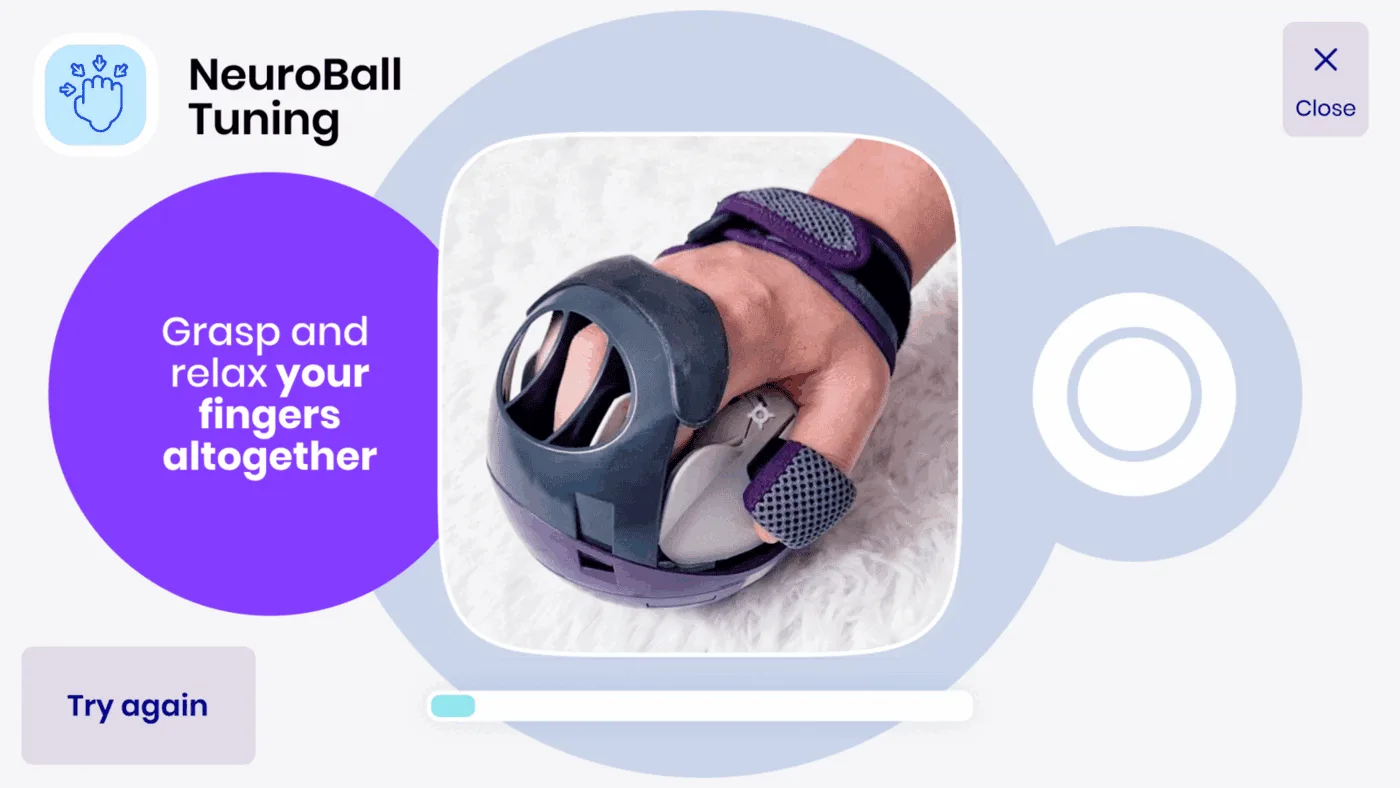
Calibration was a known drop-off point, a dry technical step patients abandoned. We rebuilt it as a guided sequence so setup ended in a small win rather than a chore.
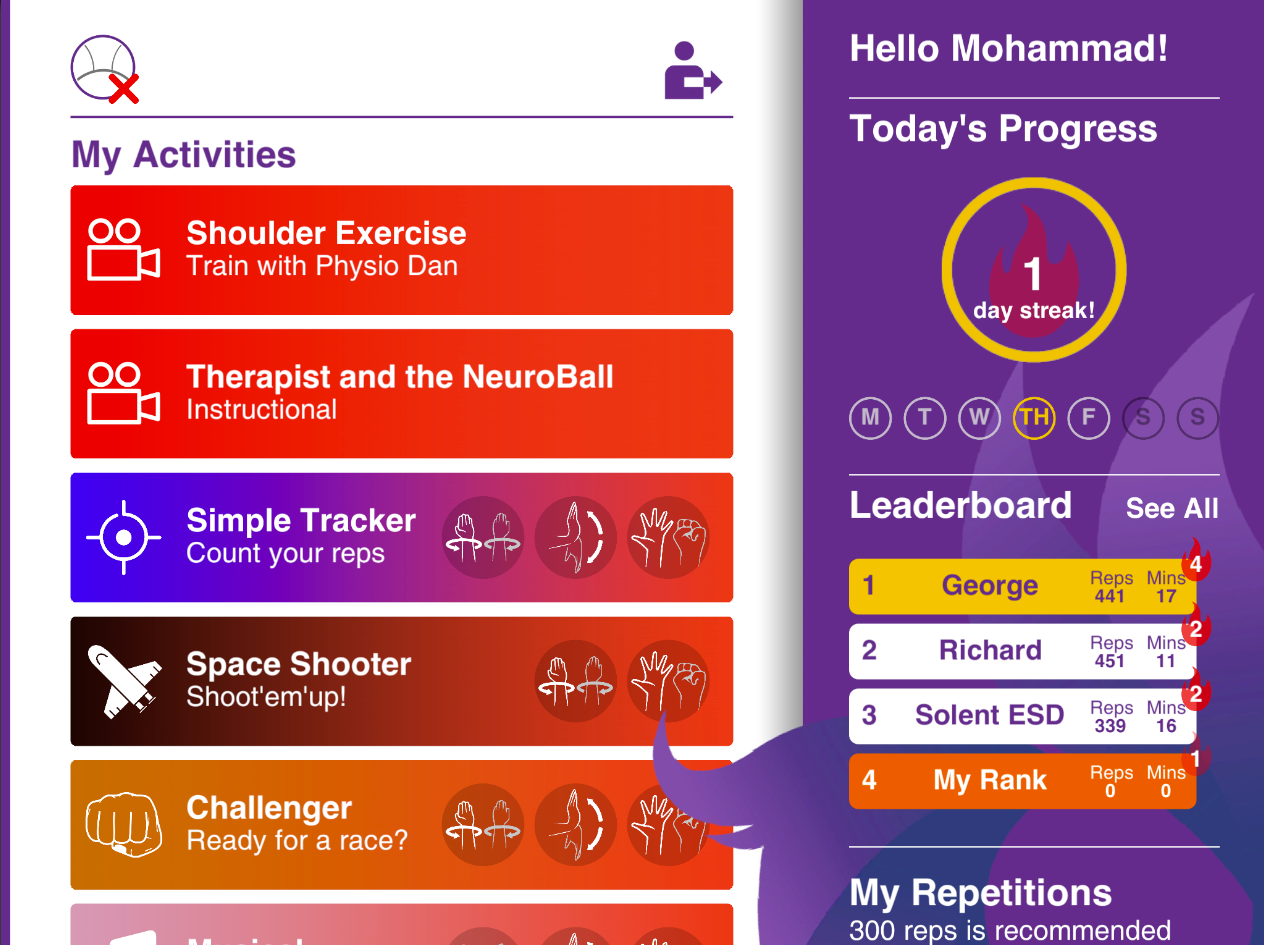
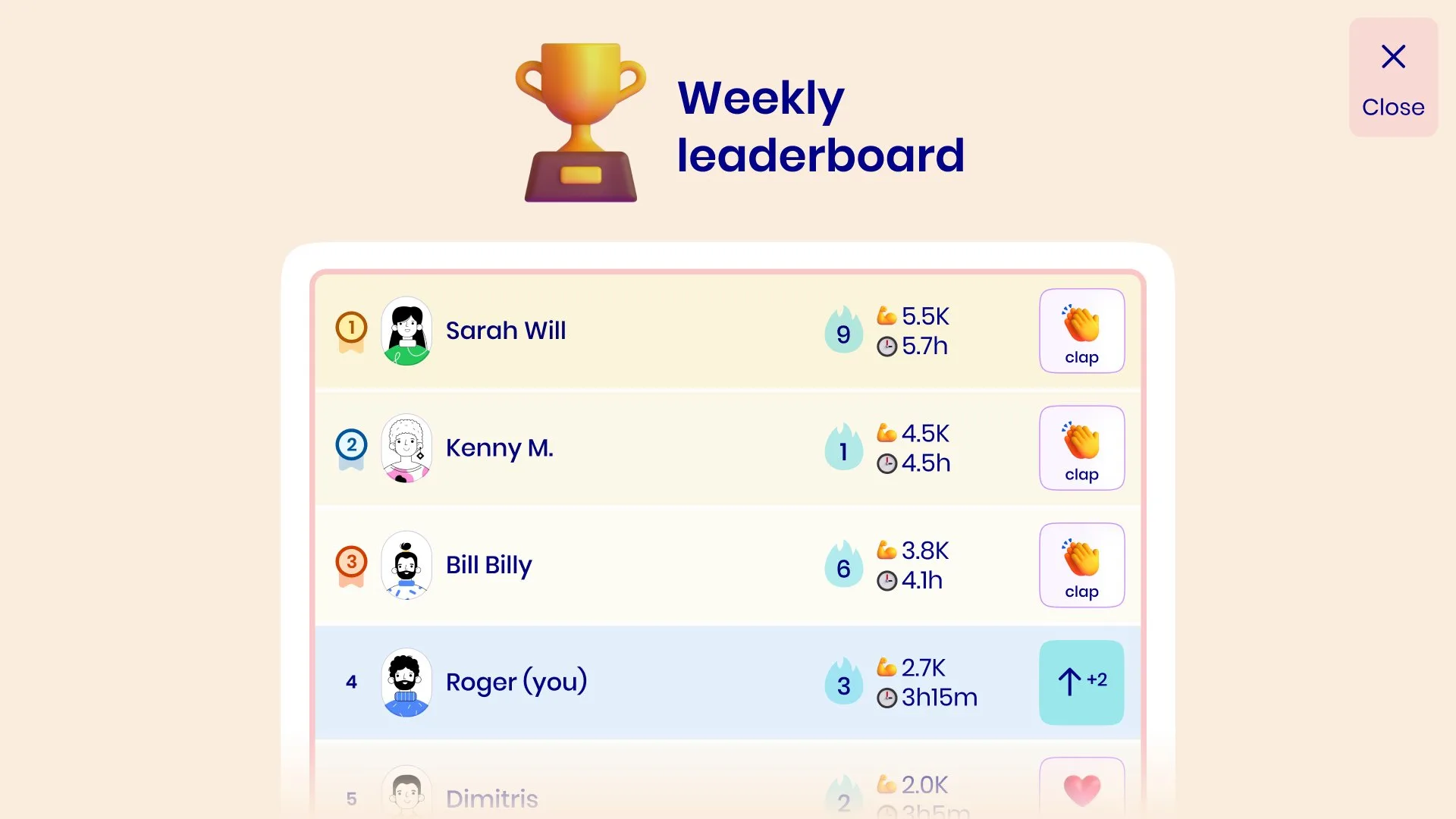
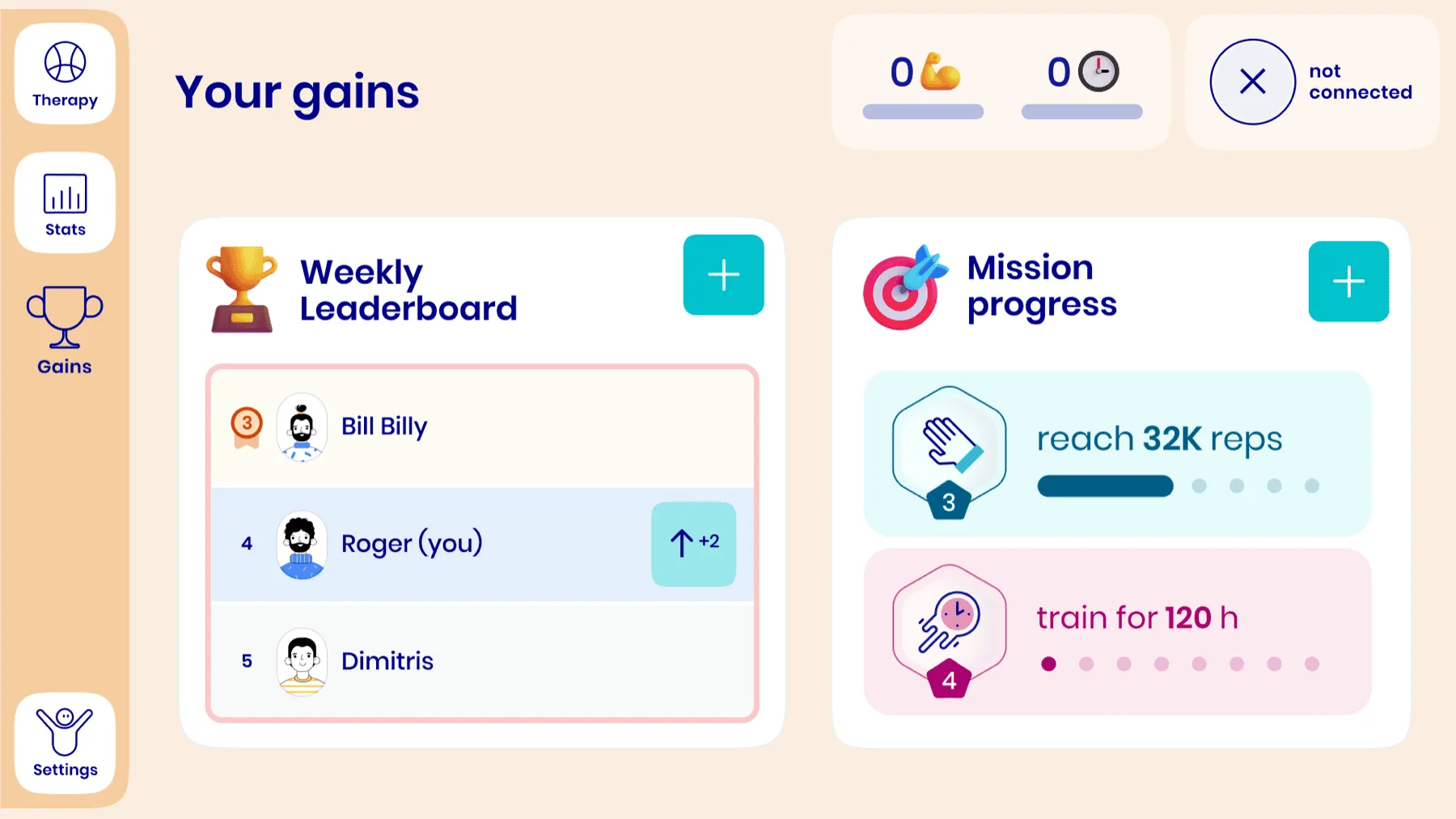
Retention mechanics with clinical intent. Our CTO was pushing hard for gamification and serious games, and we worked out together what that should mean for these users. Mostly it meant restraint. Streaks, challenges, progress tracking and a social leaderboard, built on one research finding: stroke survivors want evidence they are improving more than they want cartoon rewards. We left out the mechanics that make consumer apps compulsive, because a patient who feels punished for missing a day stops doing therapy, and one pushed too hard can overdo it. Every mechanic was co-validated with clinicians and patients before it shipped.
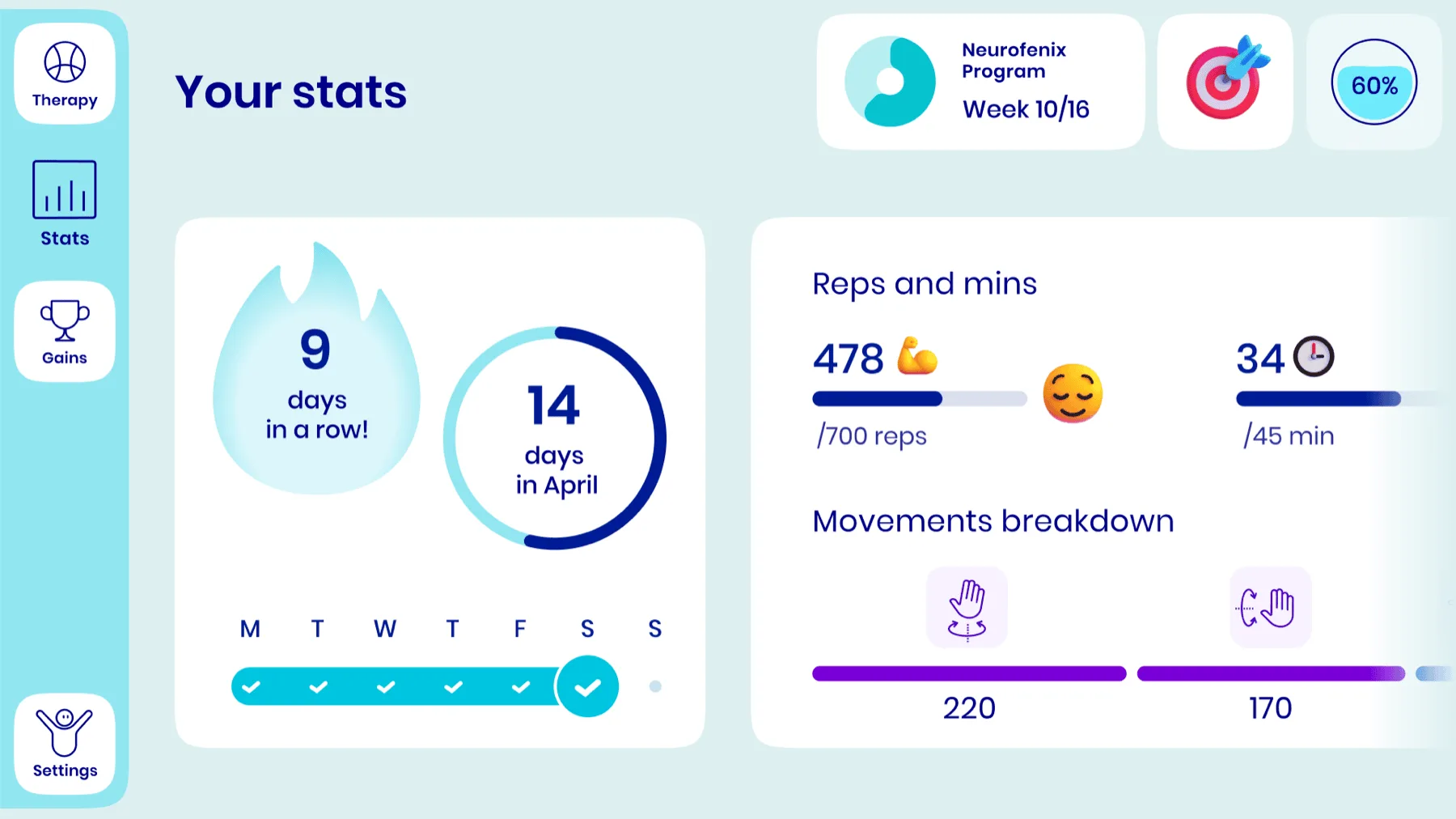
Cohort adherence averaged around four days a week. By the time I left, the platform's therapy data ran to 31M+ repetitions across 680K+ sessions and more than 26,000 hours of at-home rehabilitation.
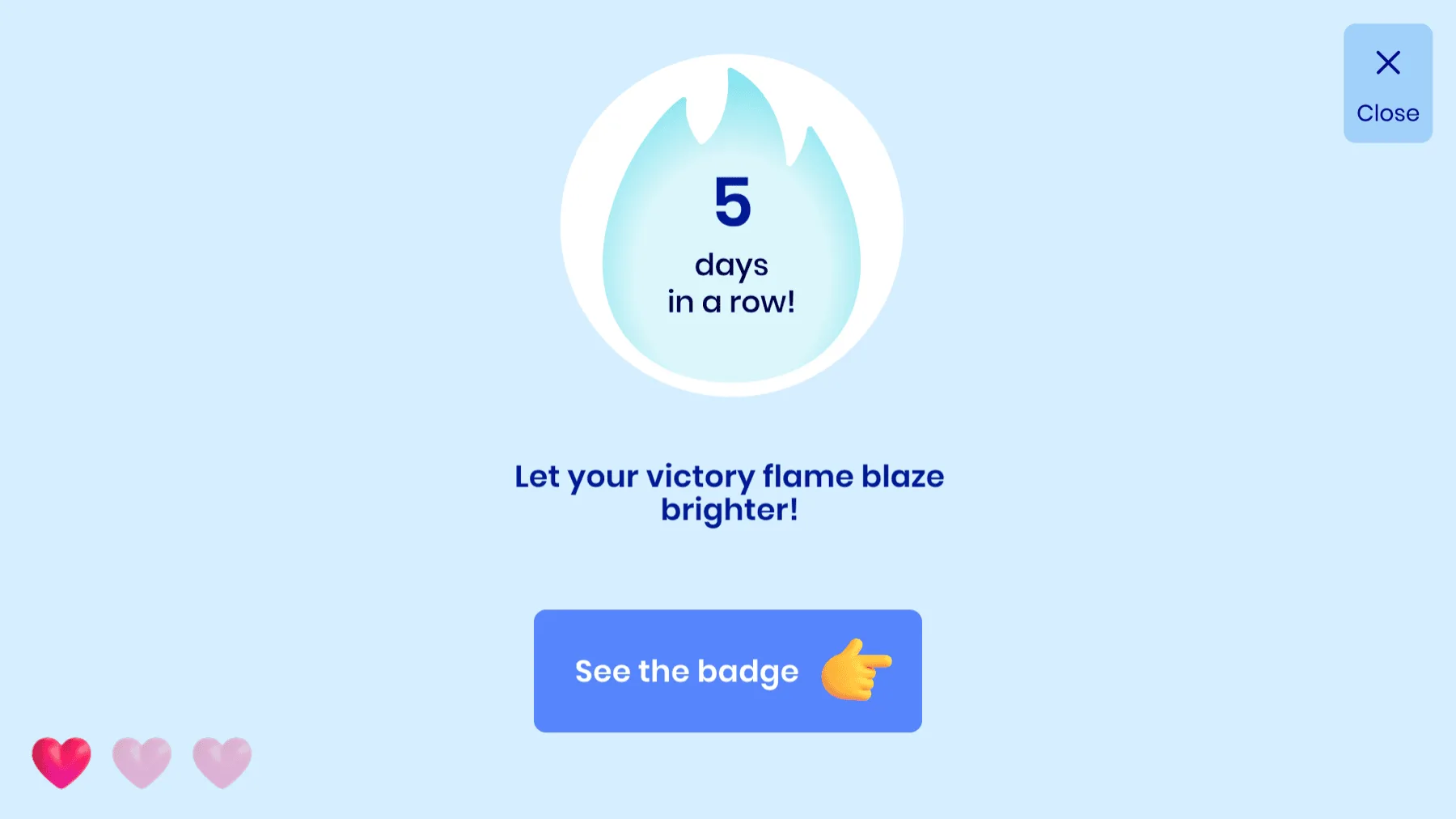
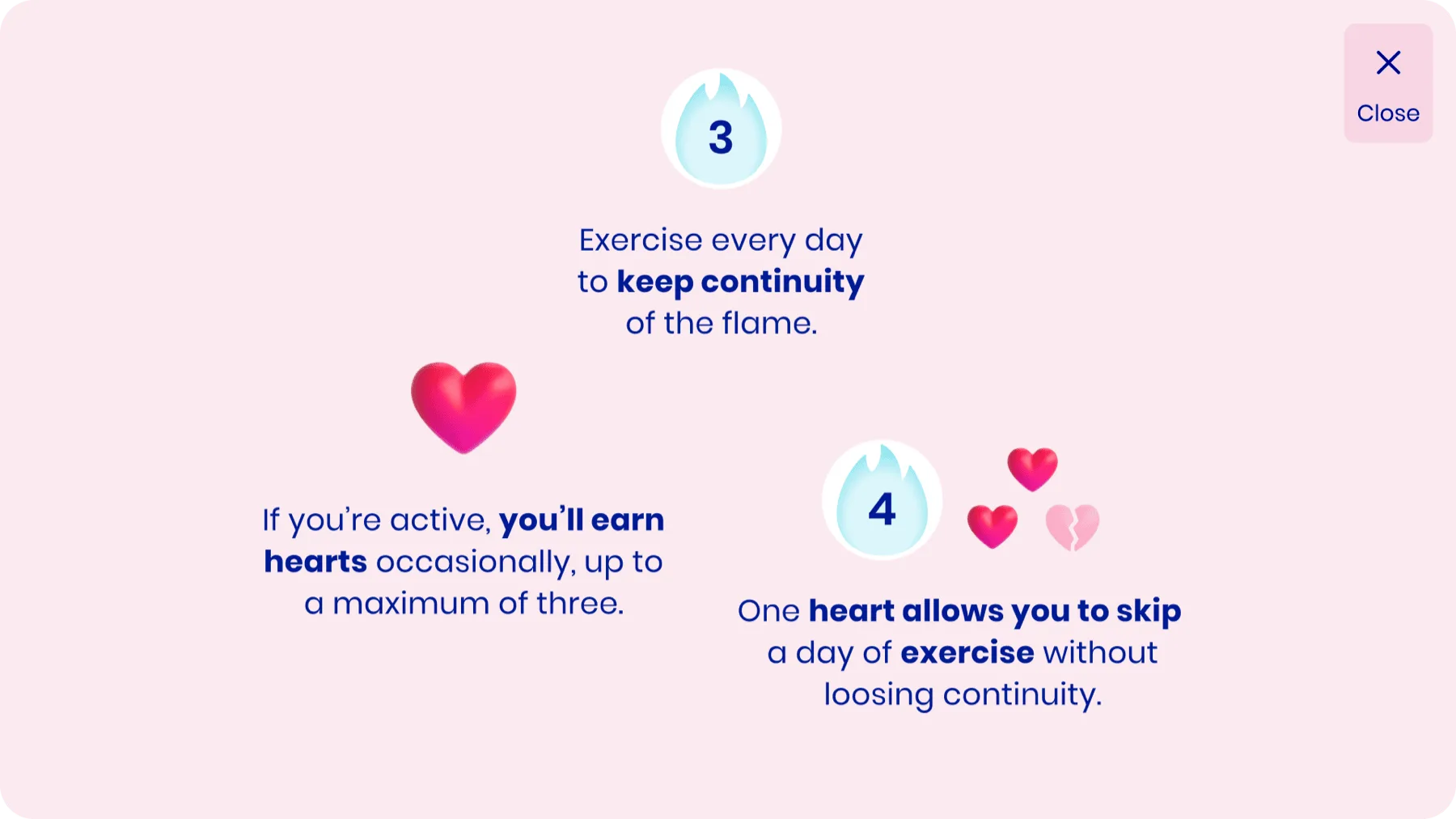
The weekly leaderboard let patients celebrate each other's milestones without making recovery feel competitive. Clinicians flagged it in research as something they had not seen in any rehab tool.
Outcomes: what it delivered
Monthly churn against the 5.6% the business model assumed, peaking at 20%. Diagnosing that gap set the rebuild priorities.
Across 680K+ sessions, retention mechanics that worked clinically and behaviourally.
Cohort adherence sustained by the retention system.
Full platform pivot delivered: patient app, clinician dashboard, enterprise pilot secured.
What I'd do differently: if I ran it again
I'd push for earlier analytics instrumentation on the clinician dashboard. We had strong behavioural data on patients but limited visibility into how clinicians actually used their tools.
I'd also set accessibility benchmarks from the start. Our patient numbers were never large enough for statistics to settle an argument, but task-completion rates by impairment level would have given us something to compare against.